John Whittaker
The GiftJohn Whittaker is a successful businessman and family provider whose confidence in work, education, and the possibilities of a shared future is tested by Annie’s death. As husband to Liz and father to Tommy and Annie, he begins as the secure center of a close household; his later grief leaves him estranged from his wife and painfully aware of how little the family can support one another. His eventual agreement to adopt Maribeth’s baby is both a practical act of care and a turning point in the family’s attempt to live beyond loss.
Identity and Family Life
John runs the state’s largest wholesale produce business, inherited from his father and grandfather. The business gives the family financial security, although the narrative distinguishes that security from great wealth: John has provided a comfortable home and a dependable living in a trade people continue to need. He is a warm, caring man who takes pride in being able to provide for his family.
At forty-nine, John is happy in his marriage and delighted by his children. He hopes Tommy will attend college before possibly joining the family business, and he has already saved for both children’s education. He also wants Annie to be as well educated as her mother, even imagining professional futures beyond Annie’s own wish to become a teacher. His faith that effort can make dreams attainable shapes his hopes for the children and reflects the steady confidence of the household before its loss.
Grief and Family Estrangement
Annie’s sudden illness exposes the limits of John’s assurance. When Liz cannot wake their daughter and fears she is gravely ill, John tries to reassure her that children sometimes recover quickly, though he is himself frightened. As Annie’s condition worsens, he joins the hurried trip to hospital: he carries her in the doctor’s car while Liz sits beside him and Tommy rides in front. At the hospital, he carries Annie into the emergency room. His actions are those of a father trying to protect his child even as the family faces what medicine may not be able to change.
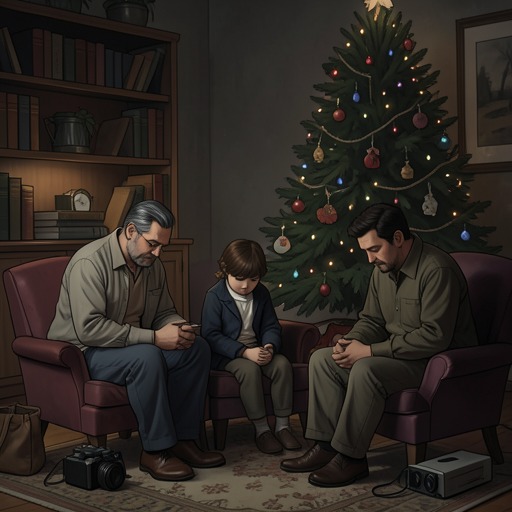
In the aftermath of Annie’s death, grief does not draw the Whittakers together. John and Liz continue to blame themselves and each other, and their marriage becomes physically and emotionally distant. Liz has learned that she cannot have another child, while the thought of intimacy has become unbearable to her. John, by contrast, longs for the family life they had before, but cannot find comfort or a way to speak about his pain. The loss also changes the family’s attention: Tommy’s needs are overlooked because his parents are so consumed by their own sorrow. He tells them they have all given up and reminds them that Annie would not have wanted their estrangement.
John’s grief is therefore shown not as a private sorrow alone but as a force altering the household’s relationships. Months later, he and Liz are still living with the consequences, and John has been drinking while Liz has withdrawn into her own grief. Yet the fact that they can name the state of their family as a shared collapse opens a way back toward one another.
Encounter with Maribeth and Tommy
John learns that Tommy has grown close to Maribeth, a pregnant sixteen-year-old rejected by her parents and left to decide what future she can offer her baby. His first response is harsh: he suspects Maribeth’s account and judges her pregnancy rather than understanding her circumstances. The scene marks the distance between John’s initial assumptions and the more considered response he develops as he listens.
When he learns that Maribeth did not want to marry the baby’s father because she did not love him, John recognizes both the difficulty and the courage of her choice. He tells Tommy that marriage can be difficult even when affection is present, and that refusing a marriage without love may be brave. He is troubled that Maribeth’s parents will not see her until after the birth, and he understands from Tommy’s openness how much she matters to his son.
John also begins to respond to Maribeth’s future as more than a question of pregnancy or marriage. He sees the unfairness of her family’s refusal to support her, while Liz offers help with schoolwork and John recognizes that Maribeth wants an education. His developing concern for her sits alongside concern for Tommy: he does not want his son to mistake compassion for an obligation to marry before either of them is ready.
Reconciliation and Adoption
The changes in John’s relationship with Liz become visible when they speak honestly about the past year. He acknowledges that it has felt as if their lives have fallen apart; Liz admits that she too has felt lost in grief. He puts an arm around her and holds her, without forcing the moment into an explanation. The quiet gesture marks a return to physical closeness after a long period in which their shared life seemed inaccessible.
When Maribeth asks Liz and John to adopt her baby, Liz initially offers another possibility: Maribeth can stay with them and raise the child with their help. Liz wants the decision to be Maribeth’s, not the product of poverty or pressure. Maribeth insists that she cannot care for the baby and asks them to make the child theirs. John listens to Liz’s understanding of this request and agrees. His response gives the adoption its family consent rather than treating it as Liz’s private wish; he also insists that Tommy should be consulted.
Tommy accepts the arrangement, recognizing that Maribeth is determined to give the baby a better life and no longer feeling that marriage is the only way to keep her close. The family prepares for the birth together. John and Tommy repaint Annie’s old bassinet, while Liz decorates it; the object connects the coming child to the family’s past without making the baby a replacement for Annie.
After Kate is born, Maribeth signs the adoption papers three days later, waiving the waiting period. She asks that the baby not be brought to her that day so she can have time to mourn. When Maribeth leaves the hospital on New Year’s Day with the baby, John takes photographs as Liz carries Kate to the car. At home, Liz responds when Kate cries, while Maribeth tries to maintain the distance she believes she must create in order to relinquish the child. The adoption makes Liz and John Kate’s parents, while Maribeth remains the birth mother whose connection to the family is not erased by the legal arrangement.
Education, Kinship, and Significance
John’s acceptance of Maribeth extends beyond adopting her baby. After Thanksgiving, he and Liz travel two hundred and fifty miles to visit the parents who have rejected her. John speaks with her father about her education and learns that he regards a woman’s future as staying home to care for children. John and Liz do not accept that limit as the measure of Maribeth’s prospects. They offer her the money set aside for Annie’s education so that she can attend college, and John tells her she may return home to finish school before choosing where to study.
The decision to redirect Annie’s college fund gives John’s provision for his family a new purpose. Earlier, he saved for each child’s education as part of his belief in their possible futures; after Annie’s death, the money can help Maribeth pursue the opportunity her own father resists. John and Liz also agree that Kate will initially be told Maribeth is their friend, preserving the adoption’s privacy while leaving open the possibility that the truth may be shared when Kate is grown.
John’s arc moves from confidence in a secure family life, through grief that makes him and Liz unable to reach each other, toward renewed partnership expressed through listening, shared decisions, and practical support. He cannot undo Annie’s death or remove the pain of Maribeth’s separation from her baby. He can, however, help make a family in which grief does not foreclose every future: Kate is welcomed, Maribeth is supported in returning to school, and Tommy’s family begins to find its way back to one another.